
4B-MAR, 4C-MAR, and 4F-MAR are part of a small but important group of novel stimulant-related compounds that interest forensic scientists, toxicologists, and drug policy researchers. They belong to the broader family of aminorex derivatives, a class of synthetic substances that has attracted attention because of structural variation, stimulant-like activity, and the challenges they create for identification in laboratory settings.
For a website like MyEveryDailyBlogs, these compounds are best discussed through an educational lens: what they are, how they differ, why they appear in forensic literature, and what scientists can learn from them. That approach keeps the content informative, search-friendly, and suitable for readers looking for serious research context rather than casual product-style coverage.
What 4-MAR Derivatives Are
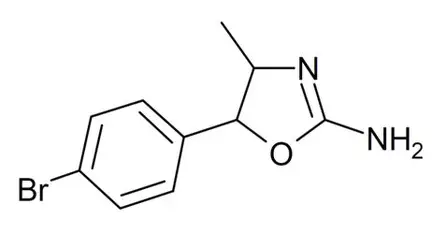
To understand 4B-MAR, 4C-MAR, and 4F-MAR, it helps to begin with 4-MAR, or 4-methylaminorex, the parent compound that inspired this family. 4-MAR is a stimulant in the aminorex class and has been discussed in scientific literature for decades because of its psychoactive properties and its relevance to designer-stimulant chemistry. The later halogenated versions — 4B-MAR, 4C-MAR, and 4F-MAR — are substitutions on that core structure that change the compound’s chemical behavior and forensic signature.
These derivatives matter because small structural changes can produce large differences in how a compound appears in mass spectrometry, how it fragments, how it behaves in chromatography, and potentially how it acts in the body. That is why they are studied by analytical chemists as much as by pharmacologists. In practice, aminorex derivatives are a good example of how designer-drug chemistry evolves faster than standard reference collections in many laboratories.
Why These Compounds Matter
The main reason 4B-MAR, 4C-MAR, and 4F-MAR draw attention is that they appear in the context of new psychoactive substances and forensic surveillance. Scientific papers have identified and characterized these molecules as novel 4-methylaminorex derivatives, confirming their structures using spectroscopic methods and high-resolution analytical tools. In other words, they are not just theoretical molecules — they are compounds that laboratories have actually needed to identify and document.
From a public-health perspective, new stimulant-like substances matter because they can enter markets faster than routine screening panels are updated. That creates a challenge for toxicology laboratories, emergency medicine, and drug-monitoring agencies. Even when human pharmacology is not fully established, the appearance of these compounds alone is important enough to warrant careful attention.
Structural Overview
The names 4B-MAR, 4C-MAR, and 4F-MAR indicate that they are substituted analogs of 4-MAR. The “B,” “C,” and “F” refer to halogen substitutions, which in chemistry means the molecule contains a bromine, chlorine, or fluorine-related substitution pattern at the relevant position. Those changes may seem small, but in medicinal chemistry and forensic analysis they can significantly alter molecular weight, polarity, fragmentation, and detection behavior.
The 2022 characterization study specifically identified these as new 4-methylaminorex derivatives and described their analytical fingerprints. That matters because reference data helps laboratories distinguish one substance from another instead of treating them as generic stimulants. It also helps explain why related compounds may share a family resemblance while still being analytically distinct.
Buy 4B-MAR in Research Context
4B-MAR is one of the halogenated methylaminorex derivatives discussed in the literature on novel stimulant analogs. Its main importance is not as a routine clinical compound, but as a research and forensic subject. When scientists encounter a compound like 4B-MAR, they are usually concerned with structural confirmation, spectral interpretation, and how the molecule fits into the broader evolution of aminorex-type substances.
From an educational standpoint, 4B-MAR is useful because it illustrates several core lessons:
- Small chemical changes can create a new analytical identity.
- Designer stimulants often emerge through structural modification of known scaffolds.
- Forensic labs need robust reference data to detect them reliably.
There is limited direct human pharmacology publicly established for compounds in this exact niche, which means researchers must be careful not to overstate effects. The most defensible discussion is about chemistry and analytical recognition, not confident claims about real-world user outcomes.
Buy 4C-MAR in Research Context
4C-MAR has gained attention because it was identified in Austria as a new psychoactive substance and later described in scientific literature as a chlorinated 4-methylaminorex analog. Its appearance in forensic reporting is a strong signal that the compound has practical relevance, even if detailed human pharmacology remains limited.
What makes 4C-MAR especially interesting is that it sits at the intersection of:
- Designer stimulant chemistry.
- Public-health monitoring.
- Forensic identification challenges.
A research article on 4C-MAR can explain how laboratories confirm the presence of a novel compound using high-resolution data, how reference spectra are used, and why the discovery of a new analog matters even before comprehensive toxicology data are available. In a sense, 4C-MAR is a case study in how modern drug surveillance works: identify, characterize, compare, and communicate quickly.
Buy 4F-MAR in Research Context
4F-MAR, sometimes written as para-fluoro-4-methylaminorex, is perhaps the most widely referenced of the three in the scientific sources linked here. It has been characterized in the literature through mass spectrometry and nuclear magnetic resonance, giving laboratories a clear analytical profile for identification. That kind of characterization is essential because a fluorinated analog can be easy to confuse with other stimulant-type substances if only partial data are available.
4F-MAR is especially useful in an educational article because it shows how fluorination changes both chemistry and analytical interpretation. Fluorine often influences molecular behavior in ways that can affect lipophilicity, receptor interactions, and spectrum patterns, though the exact biological implications depend on many variables and may not be fully established for a particular compound. In a research-focused article, the safest approach is to emphasize what the literature confirms: the molecule has been detected, structurally verified, and added to the body of knowledge around aminorex derivatives.
Stimulant-Class Background
Aminorex derivatives are usually discussed as stimulant-like compounds because the parent scaffold belongs to a class associated with central nervous system stimulation. In broader terms, stimulant-type compounds can influence alertness, energy, focus, heart rate, and blood pressure. However, the exact profile of any given compound depends on its receptor interactions, metabolism, dose, and route of exposure.
For 4B-MAR, 4C-MAR, and 4F-MAR, it is most accurate to say that they are chemically related to a stimulant scaffold and are being studied primarily as novel psychoactive substances and analytical targets. That is a very different thing from claiming a complete effect profile in humans. The scientific literature often reaches the point of structural identification before it reaches the point of comprehensive toxicology, so careful language matters.
Forensic Identification
One of the strongest reasons to study these compounds is forensic identification. When a new substance appears, laboratories need to know how it behaves under:
- Gas chromatography.
- Liquid chromatography.
- High-resolution mass spectrometry.
- Nuclear magnetic resonance.
- Fragmentation analysis.
The 2022 characterization paper on the three novel 4-methylaminorex derivatives provides a practical example of how scientists establish identity using complementary methods. Similarly, the 4F-MAR literature demonstrates how exact structural confirmation helps avoid misclassification. This is important because even a small substitution difference may produce a distinct spectrum and therefore require its own reference profile.
For readers of MyEveryDailyBlogs, this section can be framed as “why analytical chemistry matters when new substances appear.” That makes the article educational while also aligning with search intent around compound names and laboratory analysis.
Public Health Relevance
New stimulant-like compounds are relevant to public health for several reasons. First, their appearance suggests ongoing chemical innovation in unregulated markets. Second, the lack of widespread data means emergency clinicians may not immediately know what they are dealing with. Third, even a single toxicological case can be difficult to interpret without a valid reference standard or confirmed analytical match.
Public-health researchers therefore treat compounds like 4B-MAR, 4C-MAR, and 4F-MAR as part of a broader monitoring problem. They are indicators of how rapidly the landscape of psychoactive substances can change. That makes them important even when only limited human data are available, because their detection is itself part of the evidence base.
What Is Known and Unknown
A good research article should be explicit about the limits of current knowledge. For these compounds, what is well established is:
- Their existence as novel 4-methylaminorex derivatives.
- Their forensic and analytical characterization.
- Their relevance to stimulant-class and NPS research.
What is not as well established in the accessible literature is:
- A complete human pharmacology profile.
- Large-scale clinical safety data.
- Long-term toxicity outcomes.
- Consistent real-world exposure patterns.
That gap between structural identification and clinical understanding is common in NPS research. It is also why articles on these substances should stay cautious, factual, and analytical rather than speculative.
Comparison of the Three Compounds
This kind of comparison is useful because it helps readers understand the family relationship between the compounds while also showing why each one deserves its own analytical entry.
Why Researchers Study Analog Series
Researchers often study analog series because they reveal patterns in how molecular changes affect chemistry and biological behavior. In stimulant research, halogenation can change:
- Mass.
- Polarity.
- Fragmentation.
- Chromatographic retention.
- Potential receptor behavior.
The 4B-MAR, 4C-MAR, and 4F-MAR series offers a neat example of this principle in action. Rather than studying one isolated molecule, scientists can compare closely related analogs and see what changes and what stays constant. That comparison is valuable in chemistry education, forensic toxicology, and public-health surveillance.
Educational Value for MyEveryDailyBlogs
For MyEveryDailyBlogs, this topic can be positioned as a deep-dive article about how modern stimulant analogs are discovered, analyzed, and tracked. That lets the site attract readers who are interested in:
- Designer stimulant chemistry.
- Forensic toxicology.
- Novel psychoactive substances.
- Analytical reference standards.
- Public-health monitoring.
The article can also be expanded into related pieces on 4-MAR, aminorex derivatives, and forensic mass spectrometry. That creates a topical cluster that can help search performance while keeping the content clearly research-oriented.
Closing Summary
4B-MAR, 4C-MAR, and 4F-MAR are best understood as novel aminorex-derived stimulant analogs that matter primarily in the context of chemistry, forensic identification, and public-health monitoring. Their importance lies less in broad public familiarity and more in how they reveal the pace at which new psychoactive substances appear and how science responds. For a research-focused site, they offer a strong case study in how structure, detection, and surveillance come together.