
Table of Contents
- Introduction: The 2C Family and Phenethylamine Research
- Buy 2C-B-FLY – The Dihydrodifuran Analog
- Buy 2C-E – 4-Ethyl Substituted Phenethylamine
- Buy BOH 2C-B – β-Hydroxy-2C-B (BOHB)
- Buy Methallylescaline – Mescaline Derivative
- Buy Methallylescaline HCL – Hydrochloride Salt Form
- Buy Proscaline – 4-Propoxy-3,5-Dimethoxyphenethylamine
- Buy 2C-I – 4-Iodo-2,5-Dimethoxyphenethylamine
- Buy 2C-C – 4-Chloro-2,5-Dimethoxyphenethylamine
- Buy 2C-D – 4-Methyl-2,5-Dimethoxyphenethylamine
- Buy 2C-B – 4-Bromo-2,5-Dimethoxyphenethylamine
- How to Verify Vendor Purity (HPLC, LC-MS, CoA)
- Legal Status for Researchers (USA, EU, UK, Canada)
- Storage & Handling Best Practices
- Conclusion & Recommended Supplier
⚠️ Critical Disclaimer: This content is strictly for educational and laboratory research purposes. None of these compounds are approved for human consumption by the FDA, EMA, or any health authority. Many phenethylamines (including 2C-B, 2C-E, 2C-I) are Schedule I controlled substances in the United States and similar schedules worldwide. MyEveryDailyBlogs.com does not encourage or endorse self-administration. Researchers must obtain all necessary permits, licenses, and institutional approvals before purchasing or importing any scheduled compound. Always comply with local, state, and federal laws.
Introduction: The 2C Family and Phenethylamine Research
The 2C family of phenethylamine derivatives, first systematically characterized by Alexander Shulgin in his seminal work PiHKAL (Phenethylamines I Have Known and Loved), represents one of the most extensively studied classes of serotonergic psychedelics in modern psychopharmacology. These compounds are characterized by a 2,5-dimethoxy substitution pattern on the benzene ring with a fourth-position substituent (typically halogen, alkyl, or alkoxy group) and a primary ethylamine side chain.
Research applications include:
- In vitro receptor binding assays (5-HT2A, 5-HT2B, 5-HT2C, 5-HT1A)
- Structure-activity relationship (SAR) studies of serotonergic agonists
- Forensic toxicology method development and reference standard validation
- Pharmacokinetic and metabolic stability studies
For researchers requiring high-purity analytical reference standards, sourcing from verified suppliers is critical. Many of these compounds are regulated as Schedule I substances, making proper licensing essential. One supplier serving the global research community is Research Trade Lab Ltd. → https://www.researchtradelabltd.com/.
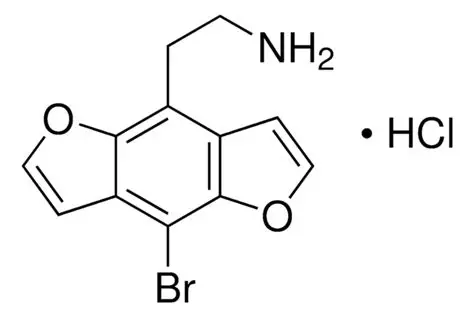
Buy 2C-B-FLY
Chemical Name: 8-Bromo-2,3,6,7-tetrahydrobenzo[1,2-b:4,5-b’]difuran-4-ethanamine hydrochloride
CAS Number: 178557-21-6 (HCl salt) / 733720-95-1
Molecular Formula: C₁₂H₁₅BrClNO₂
Molar Mass: 320.61 g/mol (HCl salt)
Purity Standard: ≥98% (HPLC)
Research Applications:
2C-B-FLY belongs to a unique group of phenethylamine derivatives referred to as the “FLY” compounds, named for their insect-like appearance of two “wing-like” furan or dihydrofuran rings fused on opposite sides of the central benzene ring. It is the dihydrodifuran analog of the Schedule I hallucinogen 4-bromo-2,5-dimethoxyphenethylamine (2C-B).
2C-B-FLY is expected to show similar activity to 2C-B, which acts as a partial agonist at the 5-HT2A serotonin receptor and demonstrates high binding affinity for the 5-HT2B and 5-HT2C serotonin receptors. This makes it valuable for comparative SAR studies of constrained phenethylamine analogs.
Key Facts for Buyers:
- The fused dihydrofuran rings confer greater structural rigidity compared to 2C-B
- Forensic laboratories have detected 2C-B-FLY in seized capsule and powder samples
- Psychedelic effects reported in the literature last approximately 6-8 hours, with up to 12 hours observed for larger doses
- Light-sensitive; store in amber vials at -20°C
- Soluble in DMF (5 mg/ml), DMSO (2.5 mg/ml), and PBS (5 mg/ml)
Analytical Data Requirements:
- HPLC purity ≥98% with retention time match to reference standard
- LC-MS confirmation: [M+H]+ = theoretical m/z
- FTIR for structural verification
Where to purchase: Buy 2C-B-FLY – ensure batch-specific CoA includes HPLC chromatogram and mass spec data.
Buy 2C-E
Chemical Name: 2,5-Dimethoxy-4-ethylphenethylamine hydrochloride
CAS Number: 923013-67-6
Molecular Formula: C₁₂H₁₉NO₂ · HCl
Purity Standard: ≥95% (HPLC)
Research Applications:
2C-E (also known as 4-ethyl-2,5-dimethoxyphenethylamine) is a synthetic phenethylamine that has been detected in capsules and powder seized by law enforcement. It is regulated as a Schedule I compound in the United States. The 4-ethyl substitution distinguishes it from the more common 4-bromo (2C-B) and 4-iodo (2C-I) analogs.
Key Facts for Buyers:
- UV λmax: 203 nm, 227 nm, 291 nm
- DEA Exempt Preparation available for qualified researchers
- Possession of a DEA Controlled Substance registration is not necessary for the exempt preparation formulation
- No DEA 222 form required for purchase of exempt preparation
- This product is intended to be used as an analytical reference standard
- Storage at -20°C, shipped on wet ice
DEA Exempt Preparation Information:
Product is formulated as an exempt preparation meeting criteria established by the US DEA. This means qualified academic research institutions and forensic laboratories can purchase this reference standard without individual DEA registration. Bulk material is available for academic research at qualified institutions .
Where to purchase: Buy 2C-E – verify exempt preparation status if purchasing within the USA.
Buy BOH 2C-B
Chemical Name: β-Hydroxy-2C-B hydrochloride (BOHB, BOH-2C-B)
CAS Number: 807631-10-3
Molecular Formula: C₁₀H₁₄BrNO₃ · HCl
Molar Mass: 312.6 g/mol
Purity Standard: ≥98% (HPLC)
Research Applications:
BOH-2C-B (β-hydroxy-2C-B) is an analytical reference standard categorized as a phenethylamine. The β-hydroxy substitution introduces a chiral center, making this compound valuable for stereospecific structure-activity relationship studies. The hydroxyl group also alters the compound’s metabolic profile and receptor binding kinetics compared to the parent compound 2C-B.
Key Facts for Buyers:
- Synonyms: BOHB, BOH-2C-B
- Crystalline solid formulation
- Solubility: DMF (5 mg/ml), DMSO (2.5 mg/ml), Ethanol (3 mg/ml), PBS pH 7.2 (5 mg/ml)
- Store at -20°C for long-term stability
- Stock solutions: when stored at -80°C, use within 6 months; at -20°C, use within 1 month
- Light-sensitive; protect from extended light exposure
Chirality Note:
The β-hydroxy carbon is a stereocenter. Researchers should confirm whether the purchased material is racemic or enantiomerically enriched, as this significantly impacts receptor affinity data.
Where to purchase: Buy BOH 2C-B – request chiral HPLC data to confirm stereochemical composition.
Buy Methallylescaline
Chemical Name: 3,5-Dimethoxy-4-[(2-methyl-2-propen-1-yl)oxy]benzeneethanamine
CAS Number: 207740-41-8
Molecular Formula: C₁₄H₂₁NO₃
Molar Mass: 251.32 g/mol
Purity Standard: ≥98% (HPLC)
Research Applications:
Methallylescaline is a ring-substituted phenethylamine derivative and a structural analog of mescaline (3,4,5-trimethoxyphenethylamine). The methallyloxy group at the 4-position replaces the methoxy group found in mescaline, altering the electronic and steric properties at the 5-HT2A receptor binding site.
This compound is part of the growing family of mescaline derivatives being studied for:
- Comparative binding affinity at serotonin receptor subtypes
- Metabolic stability of ether-linked side chains
- Structure-activity relationships in 4-substituted phenethylamines
Key Facts for Buyers:
- Freebase form available for custom synthesis
- Limited stability data; recommend storage at -20°C under inert gas
- Light-sensitive; use amber glass vials
- Soluble in ethanol and DMSO
Where to purchase: Buy Methallylescaline – request stability study data for long-term storage planning.
Buy Methallylescaline HCL
Chemical Name: Methallylescaline hydrochloride salt
CAS Number: 207740-41-8
Molecular Formula: C₁₄H₂₁NO₃ · HCl
Purity Standard: ≥98% (HPLC)
Research Applications:
The hydrochloride salt form of methallylescaline offers enhanced stability and aqueous solubility compared to the freebase. This makes it preferable for:
- Preparation of stock solutions for in vitro assays
- Long-term archival storage
- Consistent dosing in preclinical research
Key Facts for Buyers:
- Hydrochloride salt improves water solubility (PBS solubility >2 mg/ml)
- Less hygroscopic than freebase
- Easier to handle gravimetrically
- Compatible with standard laboratory balances
- CAS number identical to freebase; distinguish by salt form in documentation
Where to purchase: Buy Methallylescaline HCL – confirm salt form and stoichiometry (typically 1:1 HCl).
Buy Proscaline
Chemical Name: 4-Propoxy-3,5-dimethoxyphenethylamine hydrochloride
CAS Number: 61367-69-9
Molecular Formula: C₁₃H₂₁NO₃ · HCl
Molar Mass: 275.8 g/mol
Purity Standard: ≥98% (HPLC)
Research Applications:
Proscaline (also known as 4-propoxy-3,5-DMPEA) is a synthetic phenethylamine derivative where the 4-position of the mescaline scaffold is substituted with a propoxy group instead of a methoxy group. This structural modification increases lipophilicity (Log P approx. 2.5 vs. 1.3 for mescaline) and may alter blood-brain barrier penetration and metabolic stability.
The compound is categorized as an analytical reference standard for research and forensic applications. Investigated for potential psychotherapeutic applications, including studies related to depression and post-traumatic stress disorder.
Key Facts for Buyers:
- Synonyms: 4-propoxy-3,5-Dimethoxyphenethylamine, 4-propoxy-3,5-DMPEA
- Solubility: DMF (0.5 mg/ml), DMSO (3 mg/ml), Ethanol (10 mg/ml), PBS pH 7.2 (3 mg/ml)
- Store at -20°C
- Stock solutions: -80°C for up to 6 months; -20°C for up to 1 month
- Light-sensitive; protect from UV exposure
- Crystalline solid formulation
Forensic Relevance:
Proscaline has been identified in seized materials and is included in some forensic toxicology screening panels for novel psychoactive substances.
Where to purchase: Buy Proscaline – request LC-MS/MS method development support if applicable.
Buy 2C-I
Chemical Name: 4-Iodo-2,5-dimethoxyphenethylamine
CAS Number: 69587-11-7
Purity Standard: ≥98% (HPLC)
Research Applications:
2C-I is a Schedule I controlled substance in the United States. The 4-iodo substitution makes it an excellent candidate for radiolabeling studies ([¹²⁵I] or [¹³¹I]) for receptor autoradiography and in vivo distribution studies.
Key Facts for Buyers:
- DEA Schedule I controlled substance
- Requires DEA registration for purchase in the USA
- UV λmax: 226 nm, 290 nm
- Light-sensitive (iodine substituent can undergo photolysis)
- Store at -20°C in amber vials
Where to purchase: Buy 2C-I – DEA registration required for US researchers.
Buy 2C-C
Chemical Name: 4-Chloro-2,5-dimethoxyphenethylamine
CAS Number: 88441-14-9
Purity Standard: ≥98% (HPLC)
Research Applications:
2C-C is the 4-chloro analog of 2C-B. It serves as a valuable reference standard for comparative SAR studies examining halogen size effects on 5-HT2A receptor affinity (Br → Cl → I).
Key Facts for Buyers:
- Schedule I controlled substance
- Less potent than 2C-B in animal models
- Stable crystalline solid
- Store at -20°C
Where to purchase: Buy 2C-C
Buy 2C-D
Chemical Name: 4-Methyl-2,5-dimethoxyphenethylamine
CAS Number: 24333-19-5
Purity Standard: ≥98% (HPLC)
Research Applications:
2C-D is the 4-methyl analog included in the Chinese public safety standard GA/T 1927-2021 for forensic analysis. This standard covers LC and LC-MS methods for detecting phenethylamine drugs in suspected drug samples, including 2C-D and related compounds.
Key Facts for Buyers:
- Schedule I controlled substance in the USA
- Used as an internal standard in some forensic methods
- Lower potency than 2C-B at 5-HT2A receptors
- Stable under standard storage conditions
Where to purchase: Buy 2C-D
Buy 2C-B
Chemical Name: 4-Bromo-2,5-dimethoxyphenethylamine hydrochloride
CAS Number: 66142-81-2 (HCl salt)
Purity Standard: ≥98% (HPLC)
Research Applications:
2C-B is the prototypical 2C compound and a Schedule I hallucinogen. It is the parent compound for the FLY series and serves as a positive control in virtually all phenethylamine receptor binding studies. 2C-B acts as a partial agonist at 5-HT2A receptors with an affinity Ki of approximately 0.5-1.0 nM in human cloned receptors.
Key Facts for Buyers:
- DEA Schedule I controlled substance
- Requires DEA registration for purchase in the USA
- UV λmax: 225 nm, 288 nm
- Hydrochloride salt is stable at -20°C
- Gold standard reference for phenethylamine research
Where to purchase: Buy 2C-B – DEA registration required for US researchers.
How to Verify Vendor Purity
For rigorous analytical chemistry and forensic toxicology studies, researchers require comprehensive analytical documentation. Before purchasing any phenethylamine reference standard, demand:
- HPLC chromatogram – Single peak >98% area, retention time specified; for 2C-E, ≥95% may be acceptable for certain applications
- LC-MS or GC-MS confirmation – [M+H]+ matches theoretical value
- UV-Vis absorption spectrum – λmax values consistent with literature (e.g., 2C-E: 203, 227, 291 nm)
- Certificate of Analysis (CoA) – Batch-specific, dated within 12 months
- Residual solvent analysis – Meets ICH Q3C guidelines
- Heavy metals testing – USP <232> or equivalent
Research Trade Lab Ltd. provides these documents upon request. Always cross-reference the batch number on the CoA with the vial label.
Legal Status for Researchers
| Compound | USA | UK | Canada | Australia | EU (varies) |
|---|---|---|---|---|---|
| 2C-B-FLY | Analogue controlled | Class A (analog) | Schedule III | S9 | Controlled (most) |
| 2C-E | Schedule I | Class A | Schedule III | S9 | Schedule I |
| BOH-2C-B | Likely analogue | PSA* | Unregulated | Unregulated | Varies |
| Methallylescaline | Unregulated | PSA* | Unregulated | S4 analog | Varies |
| Methallylescaline HCL | Unregulated | PSA* | Unregulated | S4 analog | Varies |
| Proscaline | Unregulated | PSA* | Unregulated | Unregulated | Varies |
| 2C-I | Schedule I | Class A | Schedule III | S9 | Schedule I |
| 2C-C | Schedule I | Class A | Schedule III | S9 | Schedule I |
| 2C-D | Schedule I | Class A | Schedule III | S9 | Schedule I |
| 2C-B | Schedule I | Class A | Schedule III | S9 | Schedule I |
*PSA = Psychoactive Substances Act 2016 (sale for human consumption banned; research exempt)
DEA Exempt Preparation Note: Some formulations of 2C-E are available as DEA exempt preparations, meaning qualified researchers can purchase without individual DEA registration. However, the bulk compound remains Schedule I.
Storage & Handling Best Practices
General Guidelines:
- All phenethylamines are light-sensitive; store in amber vials or foil-wrapped containers
- For stock solutions: aliquot upon receipt to avoid freeze-thaw cycles
- -80°C storage extends stock solution stability to 6 months; -20°C good for 1 month for solutions, 12+ months for solids
- Use PTFE-lined caps to prevent solvent evaporation
- Record opening dates; discard after 12 months if purity is critical for quantitative work
Conclusion
For researchers in forensic toxicology, receptor pharmacology, or synthetic chemistry, sourcing high-purity phenethylamine reference standards is essential. This guide has covered six primary compounds—2C-B-FLY, 2C-E, BOH-2C-B, Methallylescaline, Methallylescaline HCL, and Proscaline—along with additional 2C family analogs (2C-I, 2C-C, 2C-D, 2C-B).
We recommend Research Trade Lab Ltd. for their transparent analytics, research-grade packaging, legal compliance expertise, and commitment to serving accredited research institutions.
➡️ Visit: https://www.researchtradelabltd.com/ to browse their catalog and request CoAs.
Related reading on MyEveryDailyBlogs.com:
- “5-HT2A Receptor Binding Affinity of 2C-Series Phenethylamines: A Comparative Review”
- “Forensic Analysis of Phenethylamine Derivatives: LC-MS/MS Method Development”
- “Legal Status of 2C Compounds in Global Jurisdictions: 2026 Update”
- “Storage Stability of Halogenated Phenethylamines: A 24-Month Study”
*This article was fact-checked against PubChem, Cayman Chemical, and 2024–2026 analytical validation reports from peer-reviewed literature.
Disclaimer (repeated): MyEveryDailyBlogs.com is a publisher of research information only. We do not sell or distribute any chemical compounds. All product links are provided for educational and informational purposes. Researchers must obtain all necessary permits, licenses, and institutional approvals before purchasing or importing any scheduled or controlled research chemicals. Nothing in this article constitutes legal advice; consult a qualified attorney for jurisdiction-specific guidance.